Russia’s FSB: The KGB’s Successor and How It Operates Today

When the Soviet Union collapsed in December 1991, it left behind not just dissolved republics and rusted nuclear arsenals but also the institutional apparatus of one of history’s most formidable security states. The KGB — the Committee for State Security — had been the Soviet Union’s sword and shield for nearly four decades: running foreign […]
The NSA: From Signal Intelligence to Global Surveillance

The National Security Agency is the largest and most technologically sophisticated intelligence organization in the United States, and almost certainly in the world. Its budget dwarfs that of the CIA; its workforce of mathematicians, linguists, and engineers numbers in the tens of thousands; its physical infrastructure spans a campus the size of a small city […]
The Mossad: Israel’s Intelligence Agency and Its Most Daring Operations

The Mossad — formally known as HaMossad leModi’in uleTafkidim Meyuhadim, the Institute for Intelligence and Special Operations — is widely regarded as one of the most capable and feared intelligence services in the world. Founded in 1949, just a year after Israel’s establishment as a state, the Mossad has operated in an environment of existential […]
MI6 Explained: Britain’s Secret Intelligence Service from WWI to Today

Britain’s Secret Intelligence Service — universally known as MI6, though the organization officially prefers “SIS” — is among the oldest continuously operating foreign intelligence agencies in the world. Founded in 1909, it has operated through two world wars, the Cold War, the post-Soviet landscape, and the age of digital surveillance while maintaining the institutional culture […]
How the KGB Operated: Structure, Methods, and Famous Operations

The Committee for State Security — Komitet Gosudarstvennoy Bezopasnosti — was more than a spy agency. From 1954 until the Soviet Union’s collapse in 1991, the KGB functioned simultaneously as foreign intelligence service, domestic secret police, border guard command, signals intelligence agency, and the Soviet state’s principal instrument of political control. No equivalent organization existed […]
The Complete History of the CIA: From OSS to Modern Day
The Central Intelligence Agency occupies a singular place in the history of American power: at once the subject of congressional investigations, Hollywood mythology, and genuine strategic consequence. Founded in 1947 from the wreckage of a wartime intelligence apparatus, the CIA has spent nearly eight decades at the intersection of American foreign policy and global covert […]
The Dollar’s Dominance Under Pressure: De-dollarization Signals and What They Mean

The U.S. dollar’s position as the world’s dominant reserve currency has been called into question at regular intervals since the Bretton Woods system collapsed in 1971. Each cycle of dollar weakness, geopolitical friction, or U.S. fiscal excess generates a fresh round of de-dollarization commentary. Most of these predictions have failed to materialize — and the […]
NATO’s Eastern Flank: Capability Gaps and the New Deterrence Architecture

Russia’s full-scale invasion of Ukraine in February 2022 permanently altered the strategic calculus on NATO’s eastern flank.[1] What had previously been a relatively thin deterrence posture — forward presence supplemented by rapid reinforcement plans — has been replaced by a more sustained and capability-intensive deployment. But the transition from reassurance to credible deterrence remains incomplete, […]
OPEC+ Production Strategy in 2026: Reading the Signals

OPEC+ entered 2026 under conditions that have tested the coalition’s unity more severely than at any point since the 2020 price collapse. Sustained output restraint has kept Brent crude in a range broadly favorable to Gulf producers, but diverging fiscal pressures among member states, rising non-OPEC production from the United States and Guyana, and weakening […]
The US-China Technology Decoupling: Where the Fault Lines Now Run
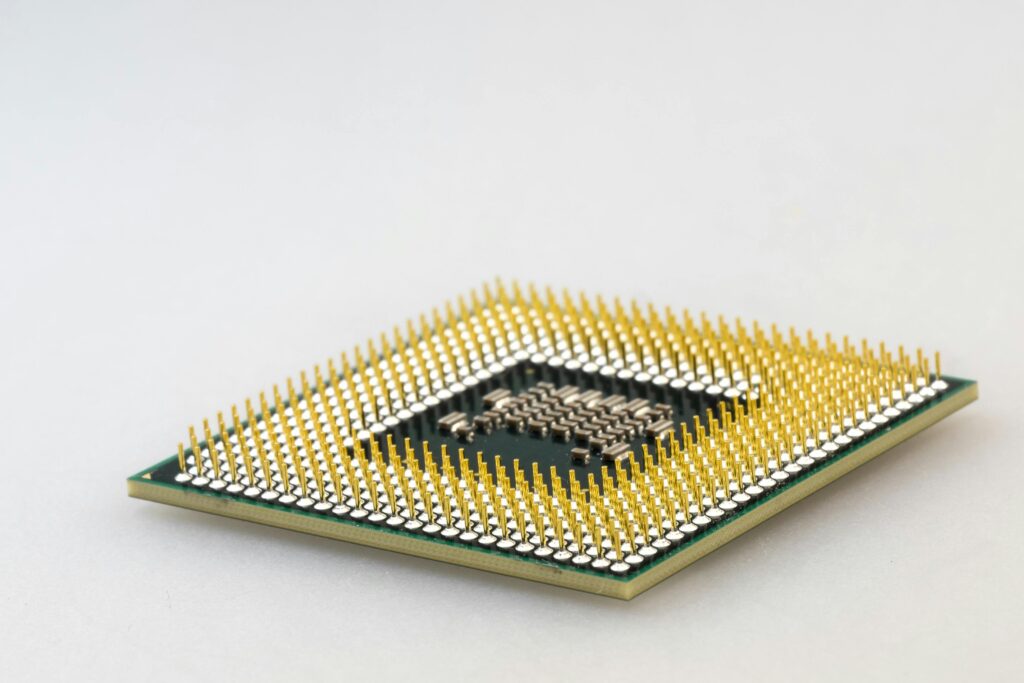
The competition between the United States and China over technology supremacy has moved well beyond trade tariffs and export controls. What began as a dispute over market access has hardened into a structural effort by Washington to limit Beijing’s access to advanced semiconductor technology, AI infrastructure, and critical hardware supply chains. The fault lines are […]